
INDUSTRIAL / ILLUSTRATIVE STUDY
North Yard Logistics
Movement, access and operational continuity.
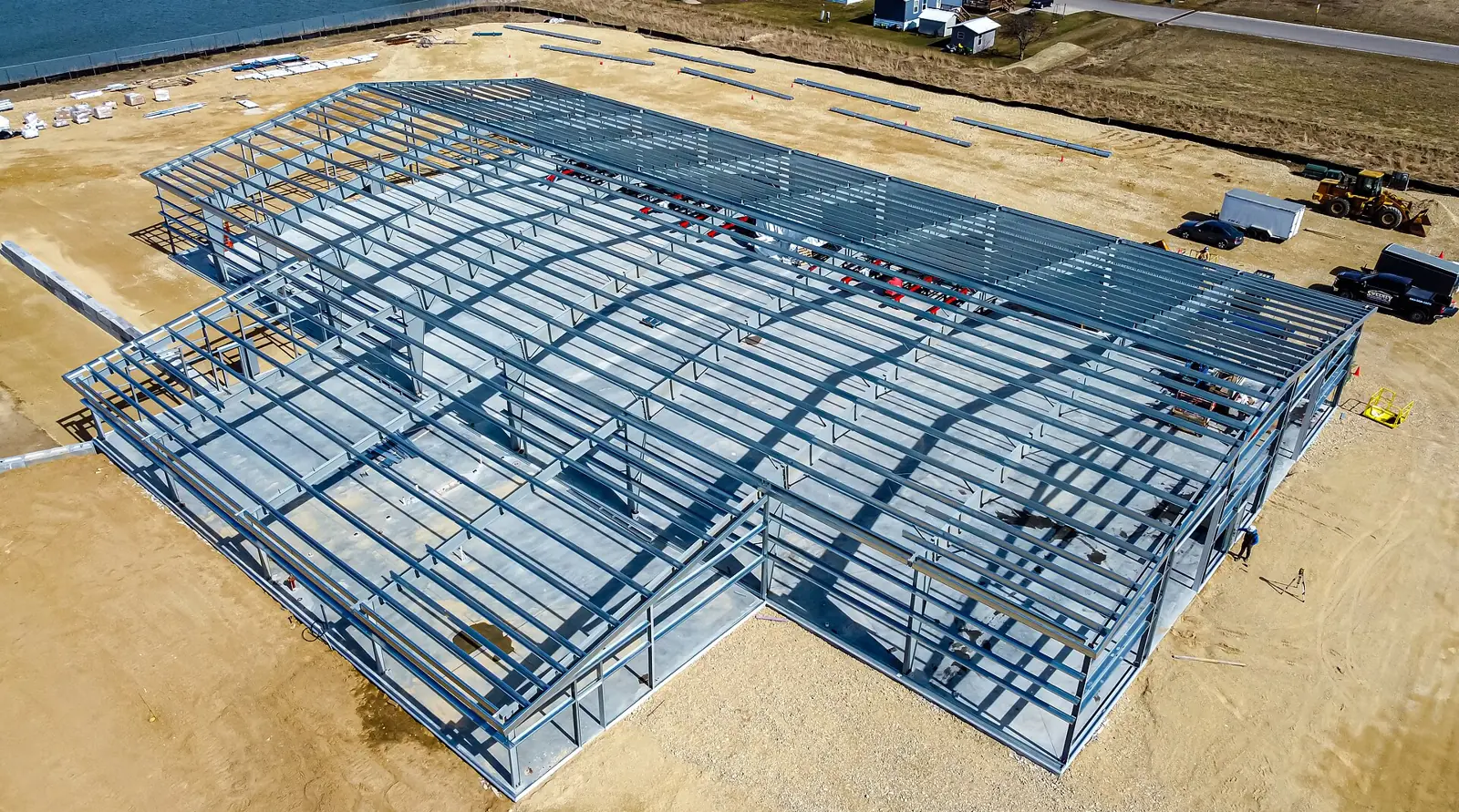
Illustrative visual study. Structural-steel construction and a separate blue-cladding materials reference, from different sites; not views of one delivered logistics campus or a before/after sequence. Source credits and exact licenses are available on Image credits. No client, contract value or delivered business outcome is asserted.
01
The brief and its constraints
Present an illustrative industrial yard and logistics brief. Circulation, service access and activity around the site require a coordinated operational review. Map stakeholders and access requirements before proposing a sequence or committing to a construction scope.
02
Movement sets the starting point
An industrial yard brief considers vehicles, people, deliveries and maintenance access. Establish the operating requirements and available survey information before treating a preferred arrangement as a technical proposal. The independent steel-frame and cladding photographs illustrate separate construction contexts; they do not verify the dimensions, loads or operations of a CivicGrid logistics facility.
03
Keep site and equipment information connected
The appointed professionals would need appropriate ground, drainage, pavement, structure and service information for the actual scope. Separate the client’s operational priorities from the specialist design needed to assess them. Identify vendor interfaces and any constraints on continuing operations while work proceeds. This narrative is not an engineering specification or a clearance to undertake site work.

04
Use location-based delivery records
A useful plan would connect work areas, access decisions, inspections and required completion information. Clarify who approves temporary arrangements and how changes reach site users. The study claims no delivered logistics outcome or verified productivity increase; it shows how the project team might keep the movement brief visible through procurement and delivery.
Continue the conversation.
Bring the brief. Build clarity.
Identify the project purpose, current information status and the decision requiring support. Include operating constraints and the appointed parties at relevant package boundaries.